
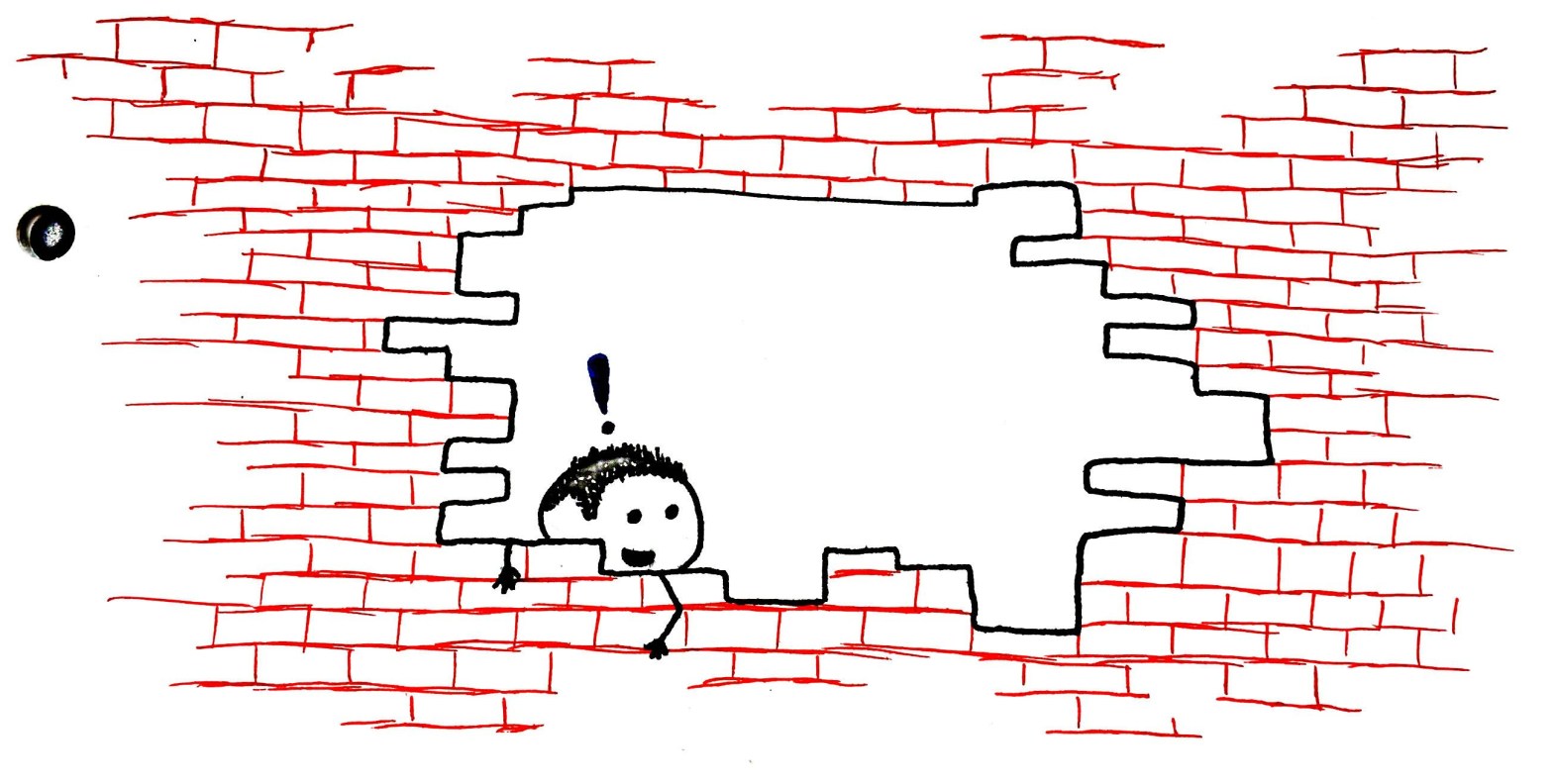
[Heads-up: this post contains a brief mention of mental health problems, a tongue-in-cheek drug reference, and a choice assortment of mid-level swear words. Not to mention a couple of truly awful math puns. (You have been warned.)]
Here’s the introduction i was planning to use in this post, the last time i worked on it (back in late January):
Heya! It’s been a while. I’ve already drifted from my goal of biweekly posting by a factor of four, and i blame that entirely on the fact that the past two months have been insanely eventful, especially when compared with the earlier stages of my time here. (More on that later.) In tandem with that, the organising idea of this post has already undergone two major evolutions since i started working on it back at the beginning of December. Time will tell whether i can get it published before it sheds its skin yet again.
Needless to say, i had no idea when writing this just how painfully on-the-nose the phrase “the past two months have been insanely eventful” would end up being, once i finally got around to publishing it in mid-April 2020. It’s admittedly a little weird, going back to proofread a post i hadn’t touched in months, in which i yammer on about living in India, learning Tamil, making friends, and so on, without even the tiniest oblique mention of “COVID-19” or “coronavirus” or “pandemic” or “lockdown”. I debated whether i should table this post, or scrap it altogether, in favour of writing something more “timely” about what life has been like since the pandemic got properly up and running… but at the end of the day, the bizarrely asynchronous timing amused me, and i figure that just about everybody is reading and hearing more than their fill of COVID-19 stories this month. Which clearly didn’t stop me from writing this paragraph, but hey, nobody’s perfect ¯\_(ツ)_/¯

So, without further ado: an update on my life in India, as of several months in the past.
When i first started writing this post, i intended it to be a collection of vignettes from my time in India so far, each one capturing a way in which my time here has been difficult. This is proooobably due to the fact that that initial writing phase coincided with my longest depressive streak since i moved here — work was dragging, homesickness was resurging, and most significantly, i was starting to feel the full weight of how alone i was here in Chennai.
Thankfully1, none of these undesirable experiences caught me off guard; in fact, i had anticipated this emotional slump well before i boarded the plane from London. I decided to move to India knowing full well that it would be one of the most challenging experiences of my life. It’d constitute the intersection of two massive transitions — from student life to the workforce, and from the Western world to the Indian subcontinent — and each would bring with it a whole host of new challenges. The latter meant the usual shock of different climate, customs, food, and cultural attitudes. The former meant that, unlike my last relocation to a new country, i would have no immediate social infrastructure to support me through that transition. Rather than being bombarded with one opportunity after another to meet peers who shared my interests, i was now entering a phase of life in which, without a hefty helping of proactivity, i could very well meet nobody besides my immediate coworkers.2 And while either of these transitions in isolation would’ve constituted a smooth continuation of my growth progression from high school in Colorado to undergrad in Chicago to postgrad in the UK, their interaction effect was bound to set this joint transition a cut above the rest in terms of difficulty.
Perhaps perversely, though, this difficulty was part of what convinced me to accept HeyMath’s offer to work for them in Chennai. During my time in the UK, it became increasingly clear to me that i habitually placed a higher value on avoiding pain/discomfort than i did on most other things — though i deeply valued going on adventures, being close with people, and a whole host of other contributors to the richness of life, the knowledge that pursuing those carried a risk of pain or discomfort was often enough to hold me back within the walls of my comfort zone. I knew that i needed a shock to my system to jolt me out of that mentality, lest the weight of it continue to keep me captive to fear, and i likely wasn’t going to find such a jolt while continuing to exist in familiar contexts (whether said context be university life or English-speaking Western countries).3
Hence, India.
And it has not disappointed in that regard. From the different cultural norms to the challenge of meeting people, from the language barrier to the unfamiliar food selection, the process of getting settled here has sat several rungs above my previous life transitions on the ol’ Ladder Of Difficulty4. As i mentioned above, this entire post was originally dedicated to describing those challenges, as a means of giving an honest view into some of the less-glamorous aspects of my most recent move abroad. Thankfully, i scrapped that idea once (a) those challenges became more manageable with time, and (b) i realised that a post like that would just be such a bummer to read, y’know?5
There’s been a lot to adjust to, but at this stage i feel like i’ve largely broken through the discomfort and into feeling like i belong here.6 Several aspects of that transition deserve (and will receive) their own dedicated posts, but for the time being, here’s a bird’s eye view of how my experience of Chennai has evolved over the past few months the course of December 2019 and January 2020.7
General life
As the illustrious Captain Obvious once said, “the way people live in India is different from they way they live in the US.” It’s a major adjustment for anyone, relocating to a country with unfamiliar norms and customs, and one of the biggest factors facilitating that adjustment for me has been the intentionality with which i’ve approached assimilation. Rather than clinging to all of my old ways of doing things and trying to lead an American existence in a country halfway ’round the world, i try to allow every new place i live in to shape the evolution of my habits and of me as a person.8 After all, i would hate to reach age 34 and look back to see that i’m the same person i was at age 24, just as much as i would hate to currently be the same person i was at age 14.9 And i certainly don’t think that every aspect of my being will be changed by my living here — my American optimism and love of Thanksgiving ain’t going anywhere, y’all. But even when some amount of differentiation is inevitable, the process of getting integrated is singularly important to me.
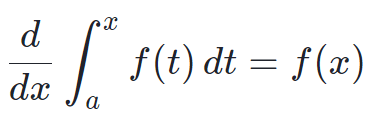
In practical terms, this has meant letting go of a lot of road-related fear i had previously been harbouring. Growing up in a system of well-defined traffic lanes, authoritative traffic lights, and regular crosswalks gives one a tendency to lean heavily on that system for their sense of safety and security. Even when there are no other vehicles around, disobeying that system (whether the transgression entails jaywalking or driving through a red light) feels highly risky.
In India, disobeying that system is a necessity if you ever want to get anywhere (without pissing off everyone you encounter along the way). And as someone who often does want to get somewhere, i had to unlearn a lot of old safety habits which were now irrelevant, and replace them with habits that would actually serve me in India. I used to conceive of jaywalking as a matter of waiting for a gap in the traffic, preferably one large enough that the laws of physics would all-but-guarantee that a car and i couldn’t cross paths during my illicit little mosey. Here in India, such a gap may well as be Godot himself for all the good that awaiting it does; here in India, successfully crossing the road instead requires a large amount of fearless, unwavering confidence, and an even larger amount of trust in the attention being paid by oncoming motorists.
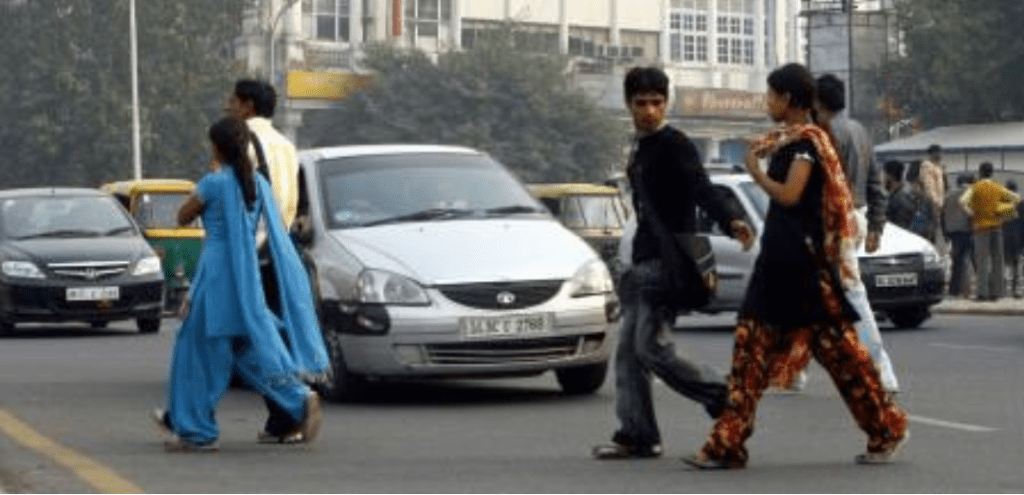
My first instinct was to compare Indian road crossing to a game of Frogger, but that would’ve been as lazy and unoriginal as it is untrue and unfair. The onus isn’t on the pedestrian to bob and weave through the unyielding trajectories of cars and two-wheelers; in fact, that’s probably one of the most surefire ways to guarantee that you do get hit. Instead, the pedestrian’s job is to take as predictable a trajectory across the road as possible, to which the drivers respond by nudging their own courses slightly left or slightly right in order not to intersect that trajectory. Minimising acceleration is the key: as long as you’re not abruptly changing your speed or direction, drivers can anticipate where you’ll be when they get close and can adjust accordingly. It’s a skill of mine that, after being engaged for the first time a few months back bloody ages ago, has been refined twice a day, five days a week, for months on end, every time i’ve crossed the large and interwoven intersection that separates my apartment from my office.
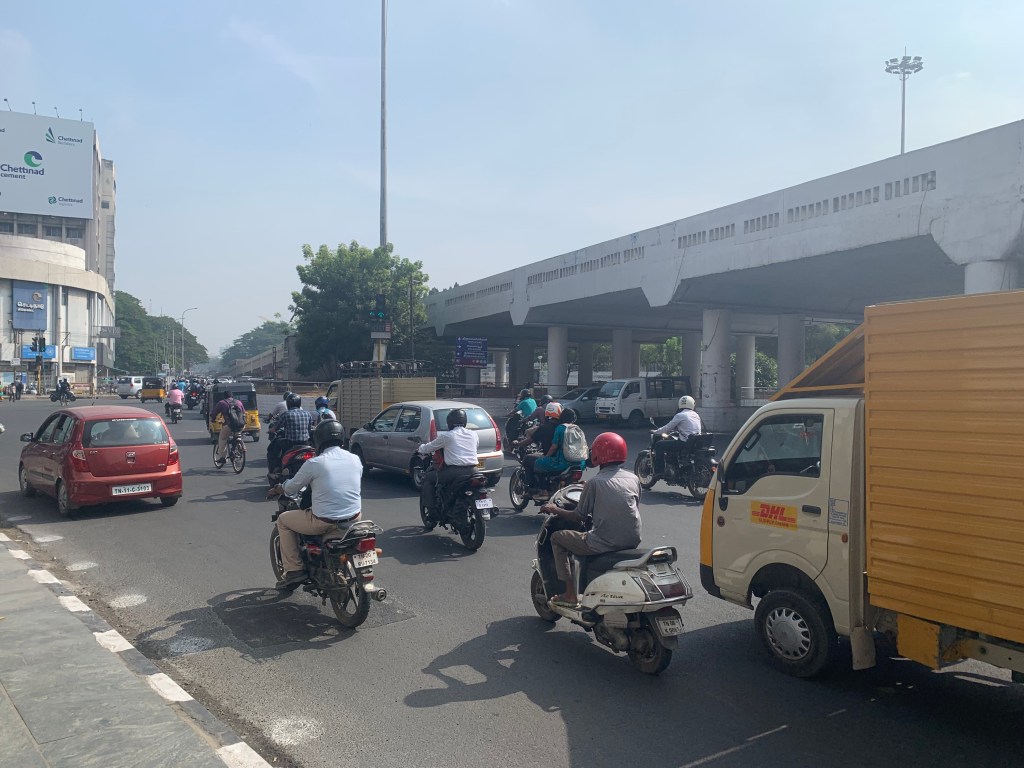
Another risk i thought i’d never take: riding a motorcycle. In working out its risk-versus-reward, i had always placed it squarely in the Really Not Worth It category of activities.10 But again, whereas i could easily go about my life in the US or UK without ever setting butt on a two-wheeled death trap, my aversion to riding motorcycles constituted a fairly large handicap here in India. I’ve never been one to say no to a friend offering me a lift, and though my skittishness about bikes did drive me to break that streak during my first week in India, it wasn’t long before i downed a hearty helping of Welp-I’m-Gonna-Die-Someday-Anyway-🤷 and started hopping on the backs of bikes with reckless abandon.11
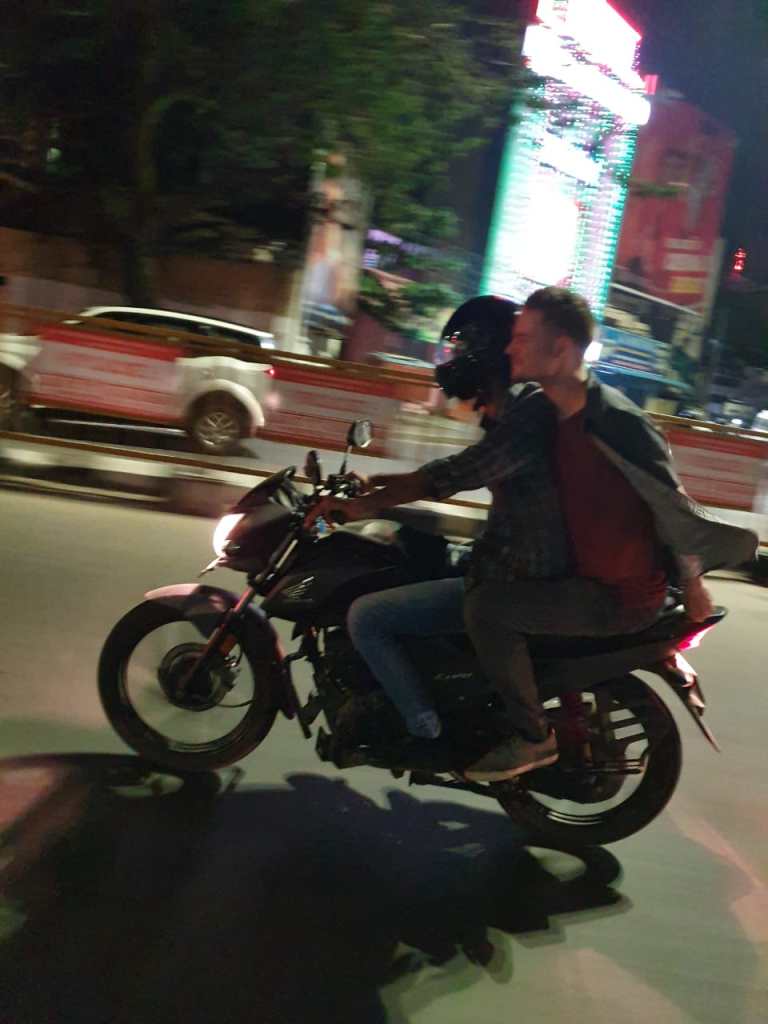
*freeze frame*
Yup, that’s me. You’re probably wondering how i ended up in this situation.
Of course, learning how to navigate the roads here has hardly been the only adaptation i’ve made to daily life in India. I’ve also had to recalibrate my entire sense of money since moving here, to an even greater extent than i needed to upon relocating to the UK. When i first moved there (the UK), i adopted the rough rule of thumb that i could tack on an extra third of the listed price to get its approximate equivalent in dollars (so something that cost £3 would be about $4, for instance). Here in India, though, my operating rule of thumb has to be “divide by 70”, so things that are close to multiples of 7 in rupees aren’t too bad to estimate (e.g. ₹500 is pretty damn close to $7), but as the numbers get larger and the easy multiples of 7 get farther away, the estimates become shakier. This phenomenon manifested distressingly clearly during my first grocery shopping trip after arrival, where i saw a bottle of olive oil for ₹1600 and had a vague hand-waving thought of “there are a lot of rupees in a dollar, so that’s not too bad” as i added it to my basket. It wasn’t until i got home that i realised i had just spent over $20 on a bottle of olive oil.

Even after i got a hold on the book-smarts task of mental currency conversion, the street-smarts skill of knowing how much things should cost proved to be a different beast altogether. Back in the US, i wouldn’t be surprised to pay $10 for a 20-minute Uber ride. Here in India, though, ₹700 for such a trip would be tantamount to highway robbery — the longest Uber trip i’ve taken here was nearly an hour long, and it cost a whopping sum of ₹320 (about $4.50). A 15-20 minute ride might set me back a couple bucks, if that. While these prices are pretty standard for India, i myself can really only avail of them when using apps like Uber; if i try to get a ride by hailing autos12 on the street, the prices they tell me are invariably double or higher compared to the listed going price, for reasons that are still an utter mystery to me…

The motivating assumption here, of course, is that white people in India (1) have more money than the average Indian person, and (2) have no goddamn clue what constitutes a fair price. But through talking with Indian friends and relying mainly on fixed-price transportation apps, i’ve pretty solidly mitigated the latter. And while the former may be true for me from a savings-account perspective, my salary (aka my only source of spending money) sits right at the average for a fresh-out-of-university job in India. I make a bit under $40 per day13, which is more than enough to cover my needs and wants out here, but it does mean that i’m not raking in the American-sized dough that these folks often assume i am.
All of this is a lot to try and convey to an auto driver as he’s driving past and shouting a price at me, of course, and it would be an absolute godsend if i could somehow immediately demonstrate to him that i’m not just another loaded, clueless tourist…
Tamil
Say, that reminds me!

Alongside my experiential education in road safety and finance management, i’ve been picking up bits and pieces of written and spoken Tamil (the primary language used in this part of India). Under the watchful tutelage of the Tamil script Wikipedia page and the book i mentioned in my last post, i slowly learned to recognise and generate the 247 (!!!) characters that form the building blocks of written Tamil.14 Though i will hardly (if ever) need to write in Tamil, you never know when the ability to read local signs, buses, and posters might come in handy, and the abundance of these even on my daily commute gives me plenty of opportunities for practice. And in the context of spoken Tamil (which is my real focus in studying the language), knowing how a word is written in Tamil script gives me a much better sense of its pronunciation than its English transliteration does, since there isn’t a one-to-one correspondence between the common sounds in the two languages.
Also — and if i’m being honest, this was my main motivation in learning the script — it’s just a lot of fun.

One day, i let slip to the coworker who sits next to me that i’d learned the script over the preceding couple of months. It ended up setting off a chain of astonished did-you-hears, and by the time afternoon tea had arrived, i was surrounded by six or seven coworkers excitedly asking me to write their names in Tamil or guess the spelling of random words.

Since that day, there’s been an unmistakable shift in the dynamic between me and the coworkers who sit in my immediate vicinity. They still regularly speak in Tamil amongst themselves, but i no longer feel like i’m sitting wholly on the sidelines; instead, i feel like i’ve suddenly been let onto the field, and even though it’s relatively certain that i’m going to be pummelled into oblivion, my teammates are making a solid effort to teach me as we go.

Sometimes Raghav will ask me a question in rapid Tamil, then (in response to the deer-in-the-headlights expression on my face) break it down word-by-word until i can both repeat the question back to him and answer it satisfactorily. Sometimes Gita will stand up to meet my gaze over the desk divider and ask if i know the name of a particular animal in Tamil.15 Sometimes i’ll hear a word pop up frequently in a particular conversation and ask them about it, or wonder aloud how to say a particular word or phrase in Tamil. And on every such occasion, the people around me have happily answered (and sometimes heatedly debated) my questions — we started out writing things down on a piece of scratch paper, but before long it became clear we’d have to move our tutorial notes to a dedicated notebook.
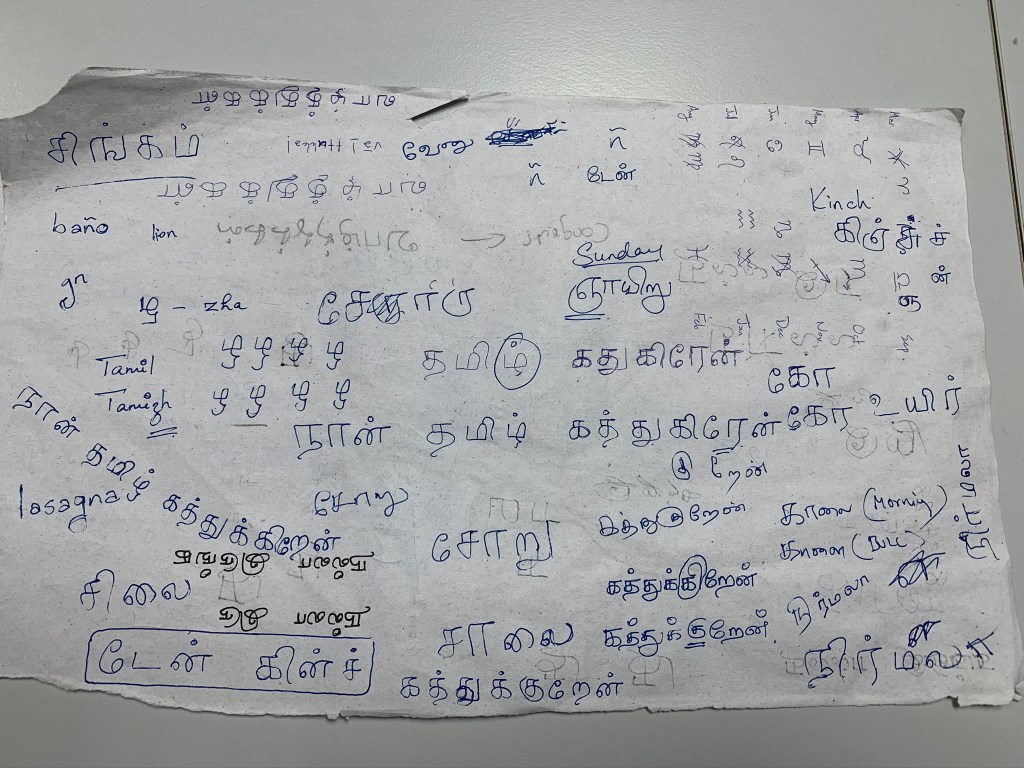
I’ve reached a point where i can now pick out occasional words in Tamil conversations, in addition to giving simple answers to certain questions; the ever-important “ama” (yes), “ille” (no), and “theriyadhu” (i don’t know) have proven remarkably useful in both regards. I would love to share more of what i’ve learned, both in terms of verbal communication and the intricacies of the Tamil script, but once again, this broad-focus post isn’t quite the right place for a linguistic deep-dive.16 So although i know you must be simply dying to learn all about the many quirks of an abugida writing system and the syntactical structure of one of the world’s most prominent Dravidian languages, i’m afraid you’ll just have to wait for my dedicated language post two or three entries down the road.

Travelling
For the first two months of my time here, i didn’t once leave the Chennai city limits; the farthest i travelled from my apartment in that time was that aforementioned one-hour Uber ride to the south part of city.17 Given how much i love travel and exploration, i’m not sure why i didn’t feel the pull to push further out into other regions of this country and this part of the world. I think it probably came from a need for a basic level of security — a sense of having a home base close by — that i hadn’t yet reached with respect to Chennai. In any case, that stationary inertia was broken in dramatic fashion last month four months ago (damn!), when two of my best friends took (separate) trips out to this part of the world and reached out to coordinate rendezvous18 with me. In the week leading up to Christmas, my Durham friend Ellen travelled with her family to Pondicherry (a former French colony about four hours south of Chennai) to meet up with her sister and brother-in-law at the tail end of their travel-packed honeymoon, and i got to spend a full day down there sightseeing with the group and catching up with her. A mere week and a half later, i flew from Chennai to Sri Lanka to meet up with my Northwestern friend Sophia, who was rounding out a month-long work holiday that, up to that point, had mainly consisted of exploring Myanmar.19
There’s seriously so much i want to share about those trips, so instead of letting that sharing totally engulf this more broadly-focused post20, i’ll tell you all about them in a dedicated entry 😁
Friends
Last but probably most, the hardest aspect of the transition had been its social dimension. I arrived without any clear sense of where and how to meet people outside my office, and unlike Bangalore or Mumbai, Chennai isn’t particularly renowned as a buzzing social hub of India. It even has a reputation for being one of the country’s more conservative urban centres.
But as i’ve already learned in Evanston, Durham, and Cambridge — none of which is a particularly happening town by most standards — the extent to which general social life proliferates a place doesn’t really matter, when it comes to my actual experiences of the place. What matters is finding like-minded people with whom i can create a social environment within the place where i live, irrespective of what that place is like as a whole.
And over the course of the past couple months my time here21, i’ve met some of those people.

When Nimmi and i were discussing my upcoming move over the summer, she mentioned that she had a few connections to other westerners living in Chennai whom she could introduce me to. About three weeks after i arrived, she made good on that promise by introducing me to Jodie Sovak, an administrator at the American International School in Chennai (AISC).22 After chatting for a bit at the office and exchanging WhatsApp numbers, she mentioned that she and her family were going to see a play that weekend, and she told me i’d be more than welcome to join them. Not only did they treat me to a stellar performance of The Mousetrap, they also invited me to join them for a pre-show all-you-can-eat lunch at the incredibly luxe Leela Palace hotel 😍
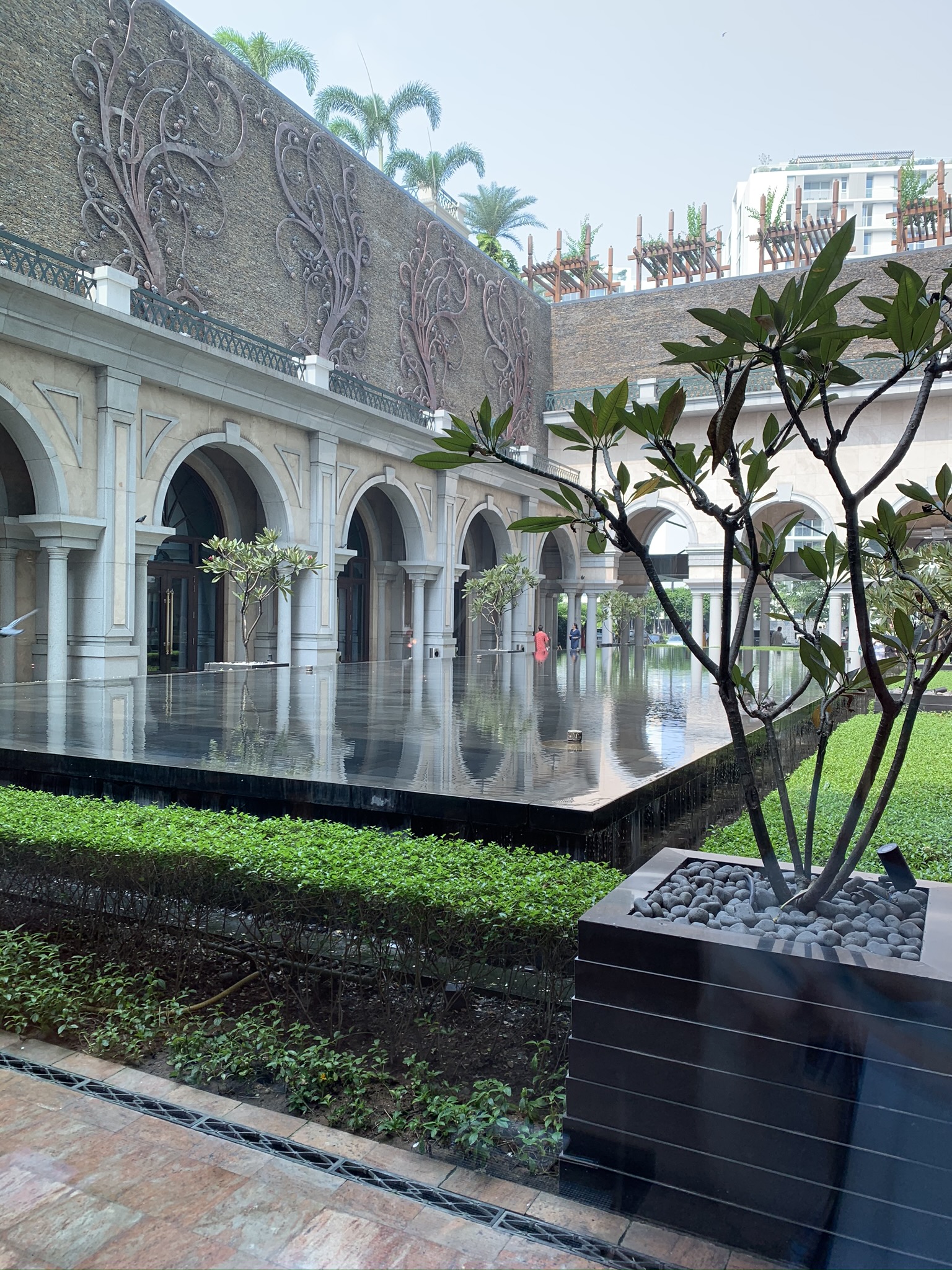

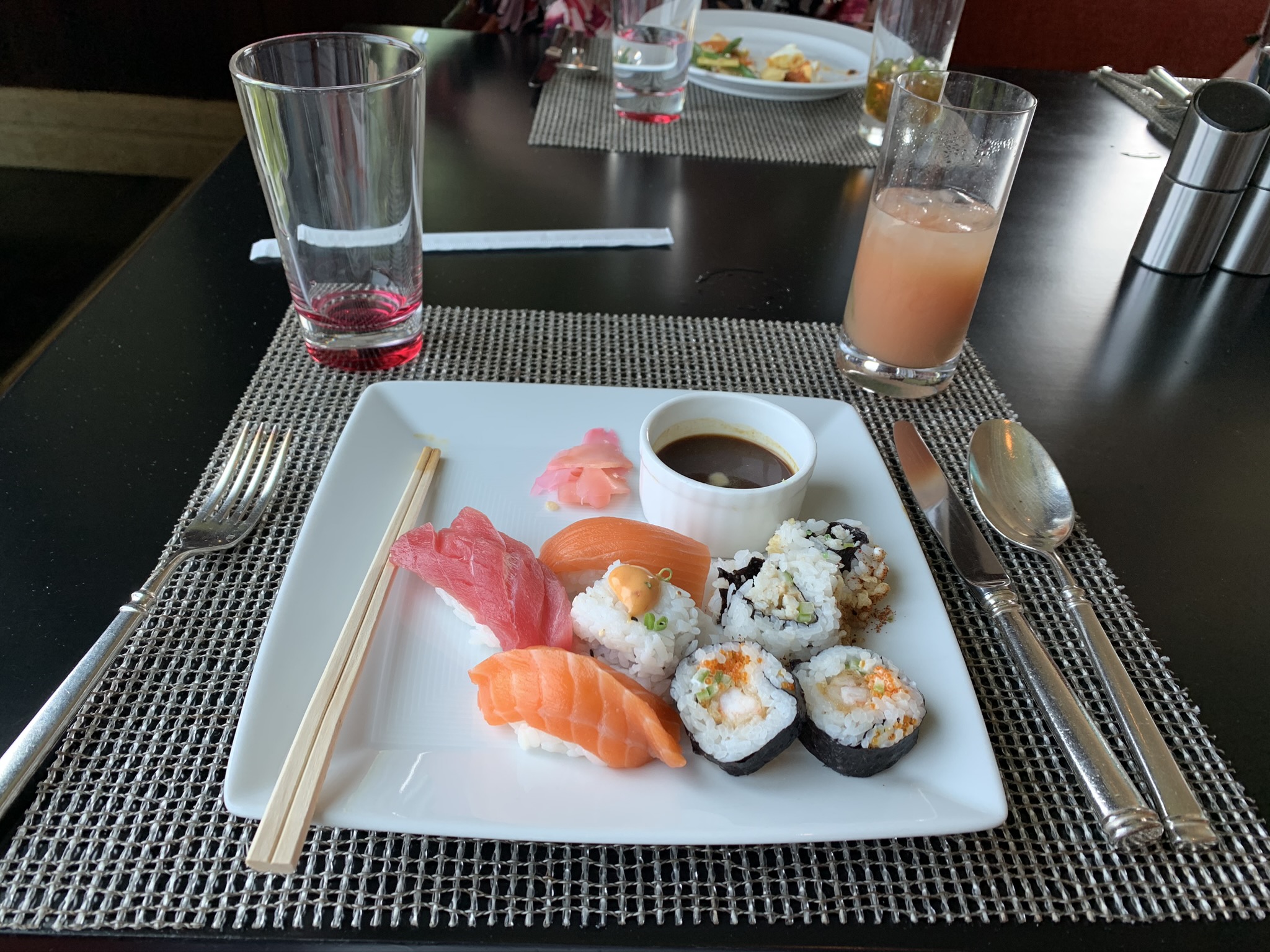
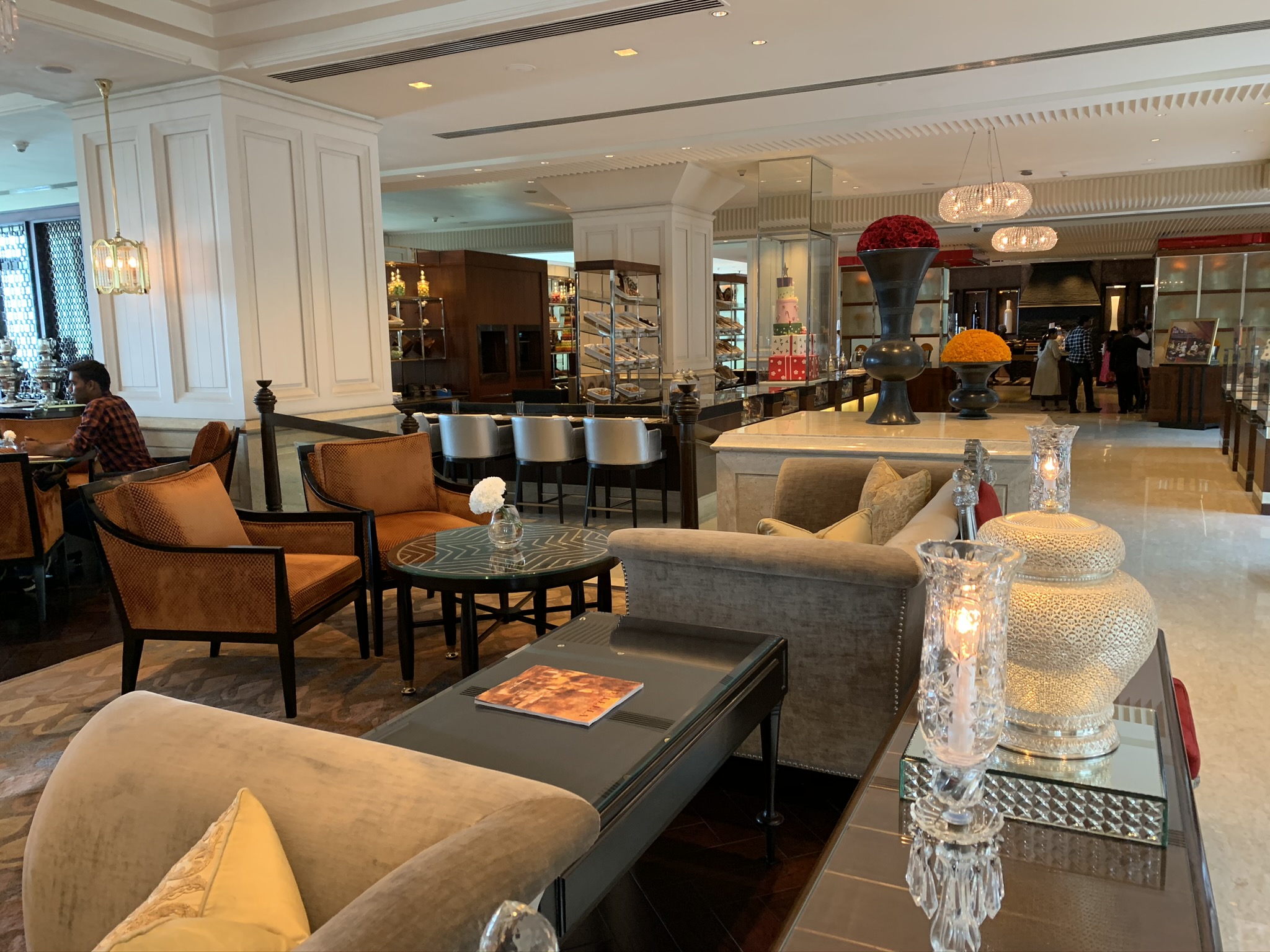
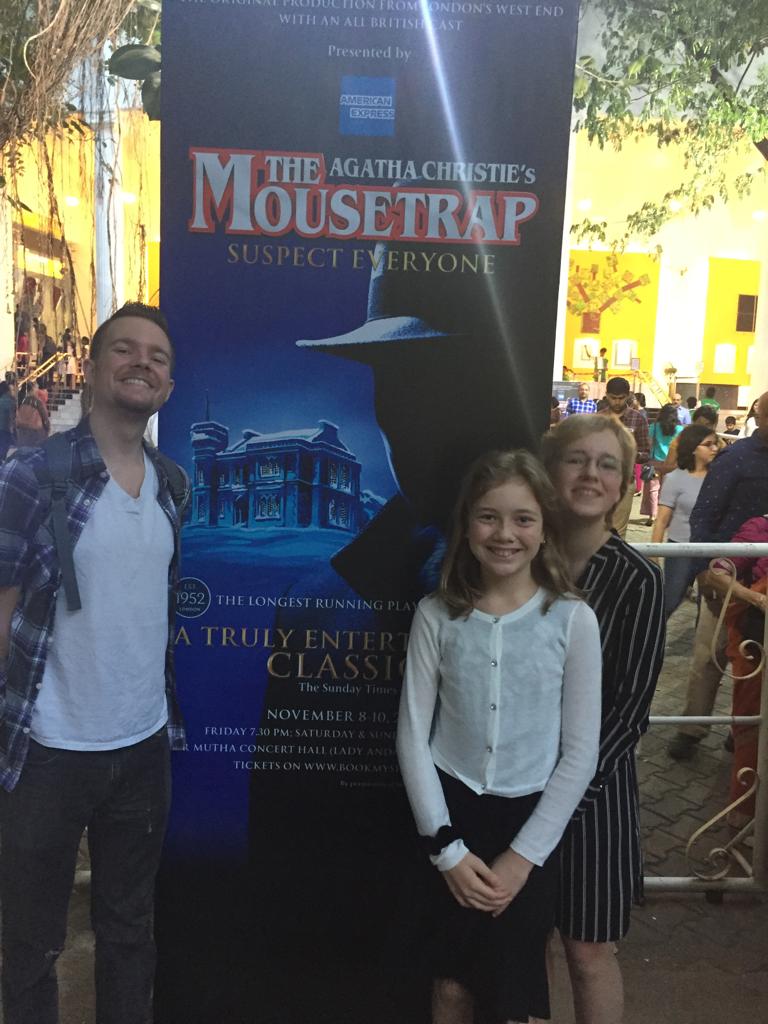
Thankfully, my ravenous rampage through the Leela spread wasn’t enough to scare them off completely, and shortly thereafter they invited me to spend Thanksgiving with them at their house in south Chennai. Despite the fact that i haven’t spent Thanksgiving with my family since 2012, i’ve never felt a lack of family atmosphere on that quintessentially American holiday — no matter where i’ve been in the world when November’s fourth Thursday rolled around, i’ve always found people to take me in for a Thanksgiving home-away-from-home, and it’s consistently one of the things i’m most grateful for on the holiday 🥰
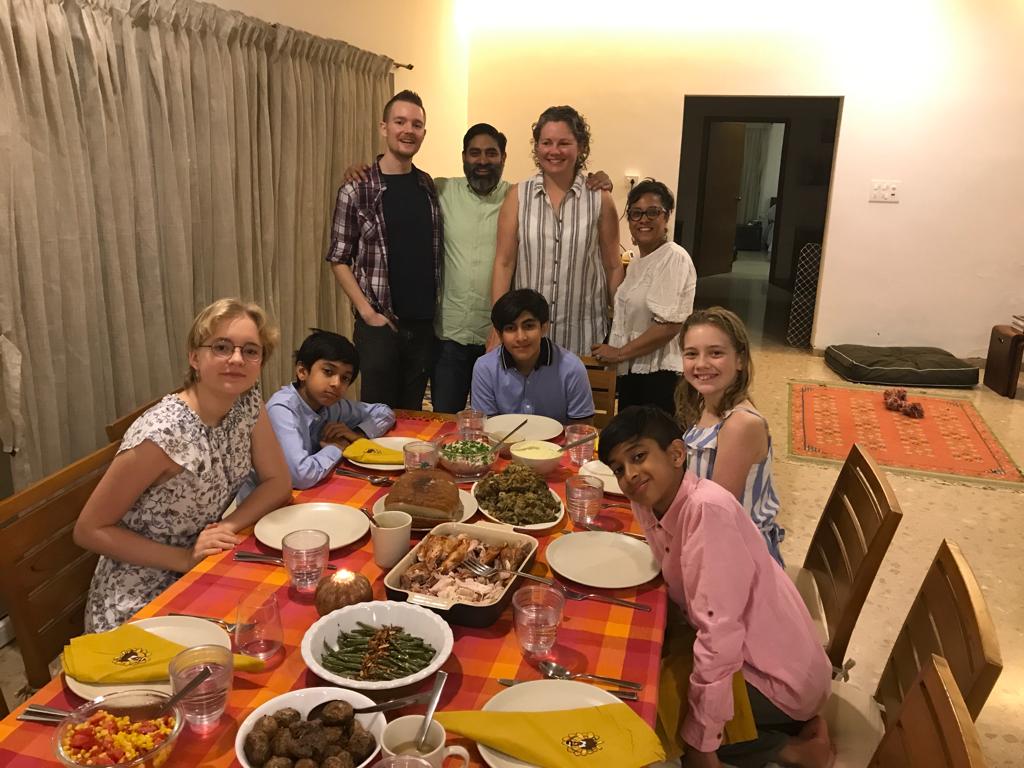
Getting to know my adoptive American family has been seriously lovely, but i still felt a need for people my age whom i could relate to as peers/friends. Though the adult world lacked the robust social environment of a university, i figured there had to be some people who still congregated around shared interests, and i started my search for those people within days of arriving in India. While browsing the ‘Social’ category of an app called Meetup, i found a group called ‘Chennai Partying Meetup’, which sounded so comically up-my-alley that i was almost suspicious.
Figuring that it couldn’t hurt to at least check it out, i joined the group and subscribed to updates, and it wasn’t too long before the first notification came through: December 7th, Besant Nagar, event titled ‘Beers by the Beach’. It was in my Google calendar faster than you can say, “gee, doesn’t that seem a little, i dunno, desperate?” Though undeterred by those peskily judgemental inner voices, i admittedly did set my expectations for the event pretty low — a no-commitment app group with 1500 members doesn’t exactly scream “there’s even a moderate amount of social pressure for people to turn up for events” — and when i arrived about an hour into the event to see that only three other guys had shown up so far, i further prepared myself for a dud of an evening.

The guy sitting closest to me introduced himself as Vaishnav (“but you can call me V, since you probably won’t remember that”23), an itinerant doctor who had grown up in India but spent the last 7-8 years living in Dubai, and the two guys on his right introduced themselves as Akash and Manoj, both local teetotallers who nevertheless enjoyed the social atmosphere of the events organised by Chennai Partying Meetup. We were later joined by Vivek, a Chennai Partying Meetup veteran, and the five of us ended up being the entire crew for the evening.
I gotta say: sometimes, life subverts your expectations in the most fantastic ways.
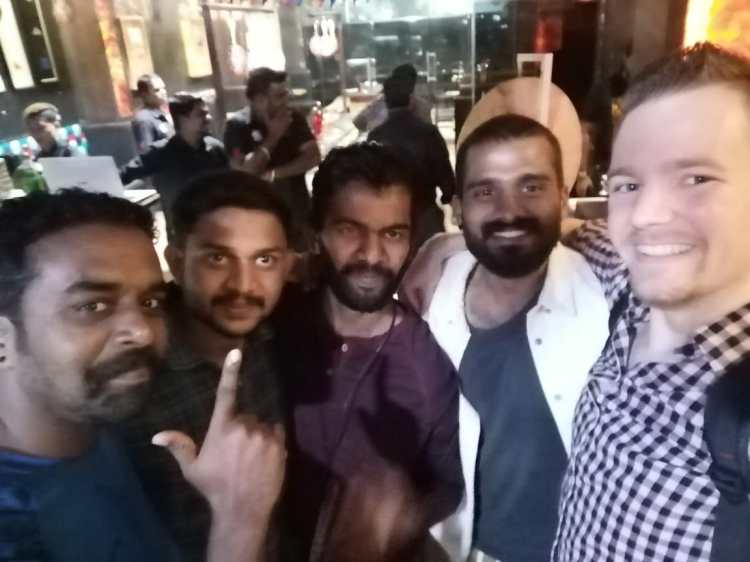
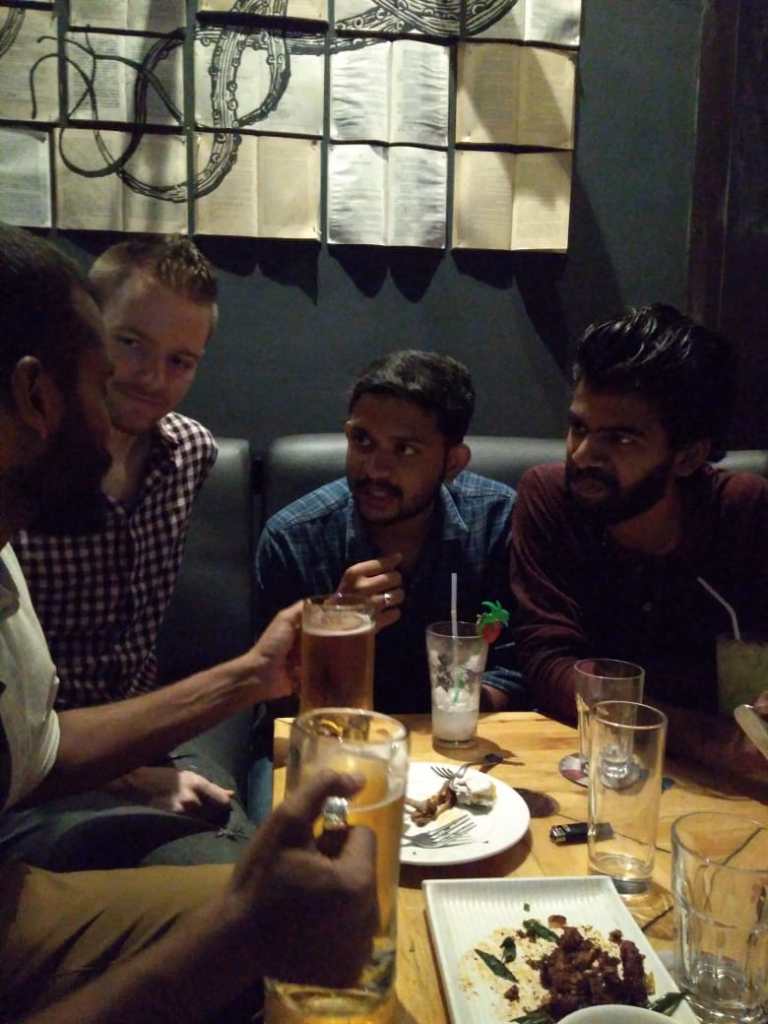

We ended up talking, joking, and laughing at the bar until it closed, and rather than call it a night, we took an assortment of autos and motorbikes to our next target: the ground-floor bar of the Taj Coromandel hotel. Vaishnav and i arrived first and went through a few beers while awaiting the others’ arrival, but when they got there, the three of them were barred by the bouncers because one of them was wearing sandals instead of shoes (a big no-no in the variably-legalistic Chennai bar scene). Vaishnav tried to work his silver-tongued magic with the bouncers to get the rest of our crew inside, but it was to no avail, and we decided to cut our losses and take our business elsewhere.
Based on the speed with which the bar staff chased after us, we probably should have paid our tab before taking our business elsewhere 😬
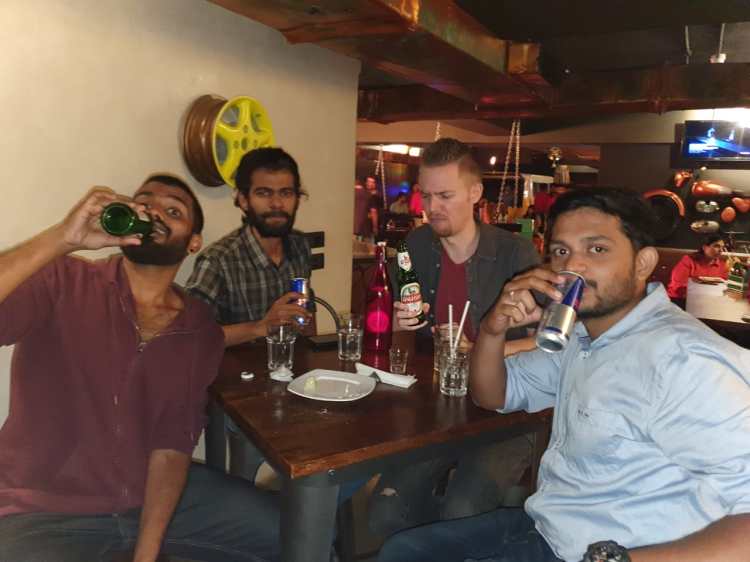
The five of us made a WhatsApp group that night, and for the next few months, we made social plans almost every weekend. From the restobar with an obnoxiously overenthusiastic DJ…
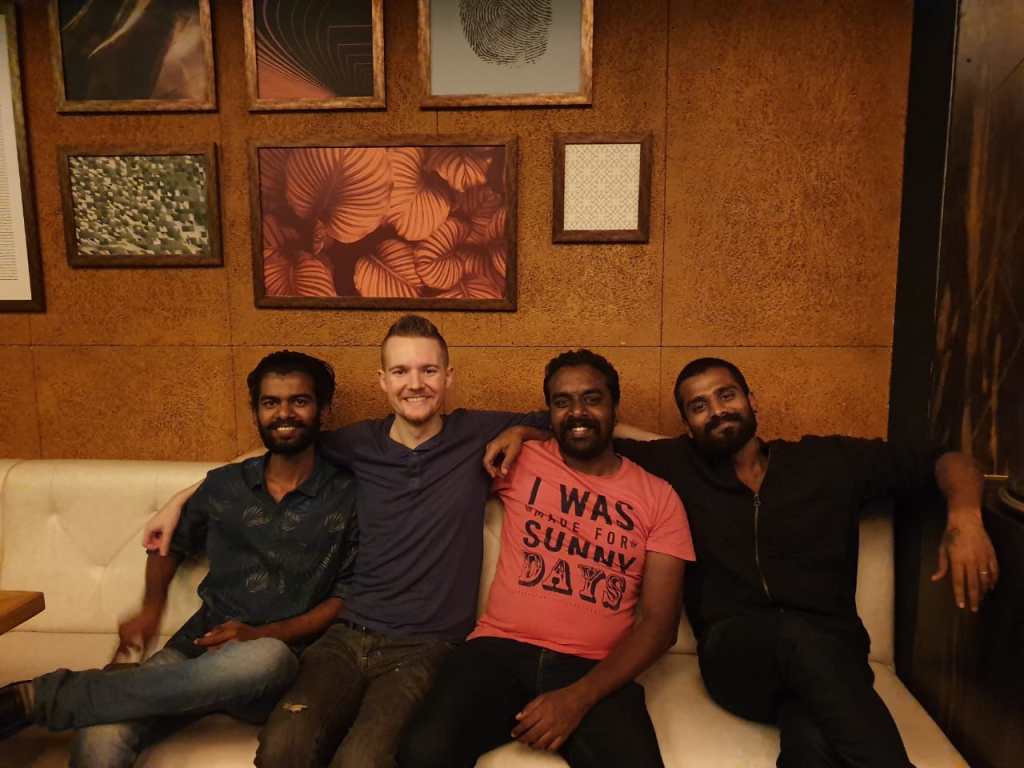
…to the half-empty bar where we were nevertheless seated in the far corner for being a group of stags24…
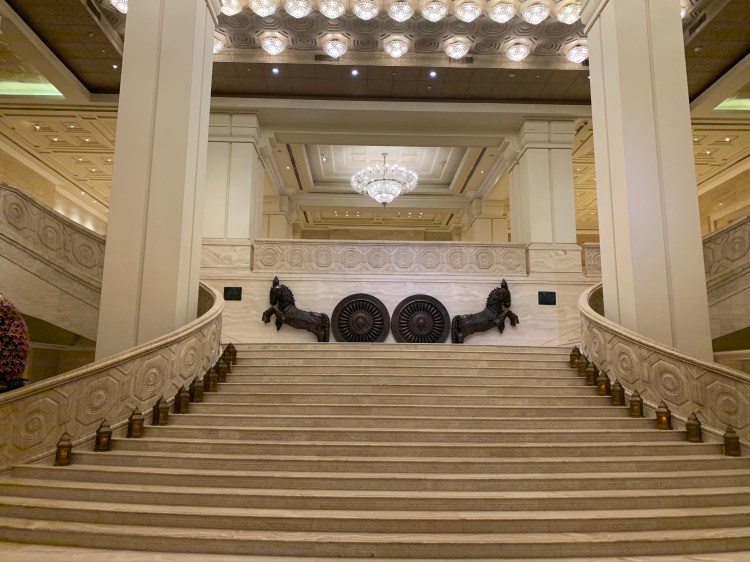
…to the fancy-ass hotel where one of the guys leveraged his connections with the staff to get us into an upscale open-bar party…
…we had a pretty great thing going, and a lot of memorable nights25 to attest to it.
Out of the five of us, Vaishnav and i were the two who most hit it off from the first night onward, and he was the one who usually got the ball rolling on our various weekend plans. As the weeks went by, the guys in the group got busier with travel and work and such, and our original crew of five dwindled down to four, then three, and by mid-January it was just Vaishnav and me. Without our usual connection to get us into the parties at ITC, we even had to stoop so low as to party instead at the Hilton’s rooftop Q Bar 😪

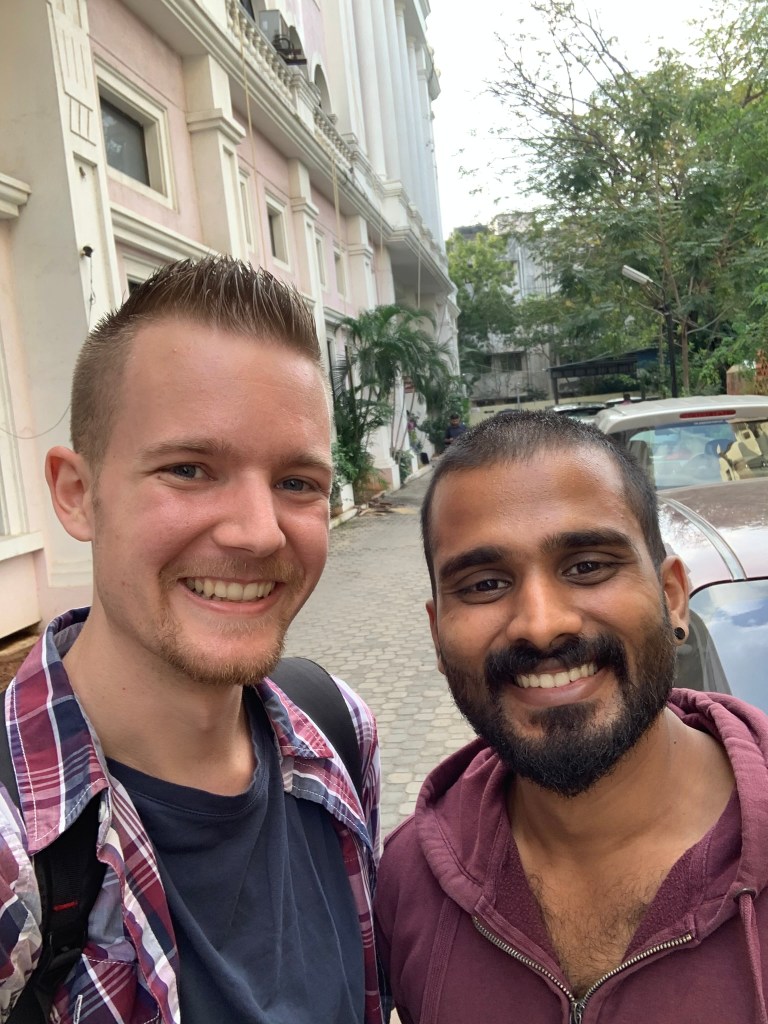
But even such proletarian pleasures as these were not to last. Less than a week after our two-man Q Bar takeover, Vaishnav announced that he had received a UK visa and, within the week, would be leaving Chennai to go work as an NHS doctor in Gloucester.26 I met him for lunch on the day of his departure, and then bade farewell to the guy who had become one of my best friends in my new city.
Though i had lost my main partner-in-crime for weekend debauchery, all hope was not lost for my Chennai social life. Around the time of my initiation into Chennai Partying Meetup, i poked around in search of comedy opportunities in the city, and lo and behold, there was an improv open jam set to take place on the first Friday of December.27
If hanging out with Vaishnav and the Meetup crew took me back to how i spent my weekend nights at uni, meeting the folks at that improv jam took me back to how i spent all the rest of my free time as a student. Though i’m a world away from all the places where i learned and performed improv, i realised at that jam that comedians are all cut from pretty similar cloth, regardless of where they come from: they’re funny, of course, but also equal measures self-deprecating and confident, close-knit and welcoming.
In short, i had found my people. And my timing couldn’t have been more perfect: that same month, Half-Boiled Improv (one of, if not the only improv troupe in the city) started putting on improv workshops every Saturday, and even though they’re more than half an hour away by car, i’ve still managed to attend nearly every single one. Not only have i gotten to know a lot of the regulars at the workshops and performers at the comedy shows i’ve attended, but the folks in the community have also gotten to know me, to the point that people i’ve never met before will occasionally come up to me and already know my name. As for what could be causing me to leave such an impression and stand out so much from the crowd, i can only assume it’s my razor-sharp wit and dashing good looks.
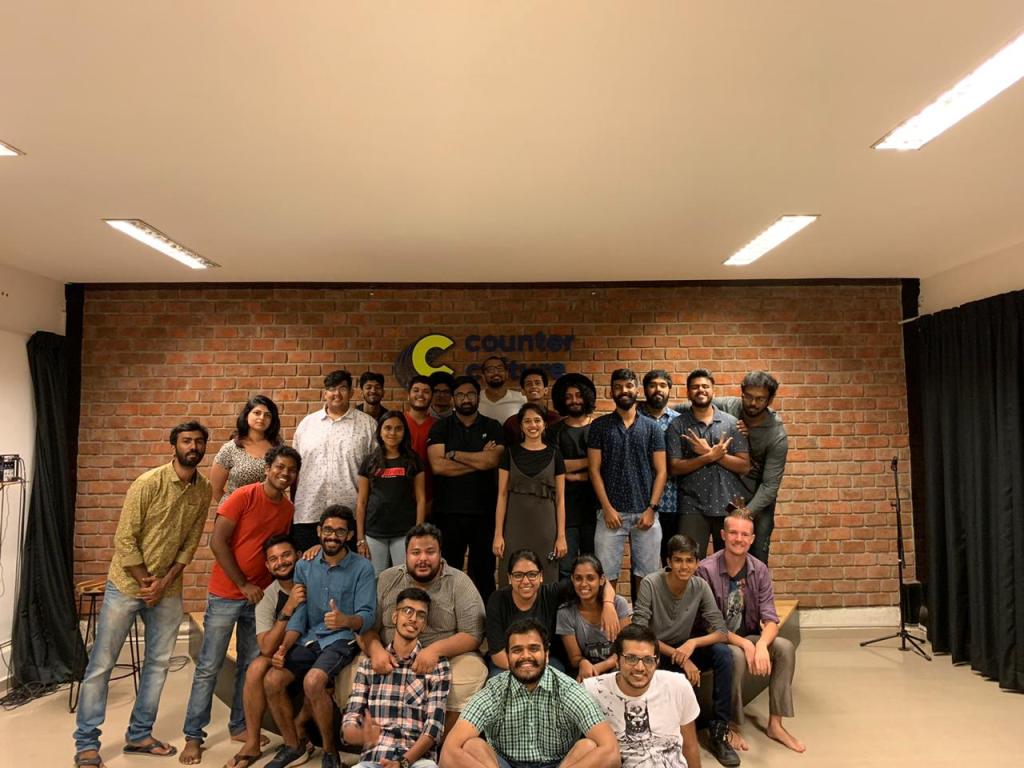
In all seriousness though, getting involved in comedy as an obvious foreigner has been such a fun experience. I get to make jokes about white people that really wouldn’t have landed in England, for one. On multiple occasions, i’ve driven an audience wild by knowing even the tiniest amount of Tamil. My friends have even reserved a front-row seat for me at their shows so they can get a bit of visible audience diversity, which is an act of altruism i’m always willing to perform. I do obviously plan to establish myself as an actual funny person here at some point (rather than just being the token white guy in every workshop or show audience), but for now i’m perfectly happy to ride this wave as far as it will take me.

Both offstage and on-, the comedians i’ve met here in Chennai have been a riot to hang out with and a delight to become friends with. Not only have they invited me (a foreigner!) out for drinks with them, they’ve even complimented my sense of humour and encouraged me to start performing my own material, which is about the biggest ego-boost someone could get from paid comedians, i think. They’ve formed the backbone of my social life here in Chennai, and i’m seriously grateful to have them.
(my comedy is as original as it is humerus 🦴)
And remarkably, these different threads of meeting people out in the city are not the only ones comprising the tapestry of my Chennai social network: i’ve even grown to become Real Friends with some of my coworkers! My first experience of a Chennai bar was with two of my colleagues, one of whom had a fair amount of experience with the scene, and the other of whom requested that his/her involvement in the night’s activities remain undisclosed.
With this in mind, the natural choice of venue was a bar called Off The Record.
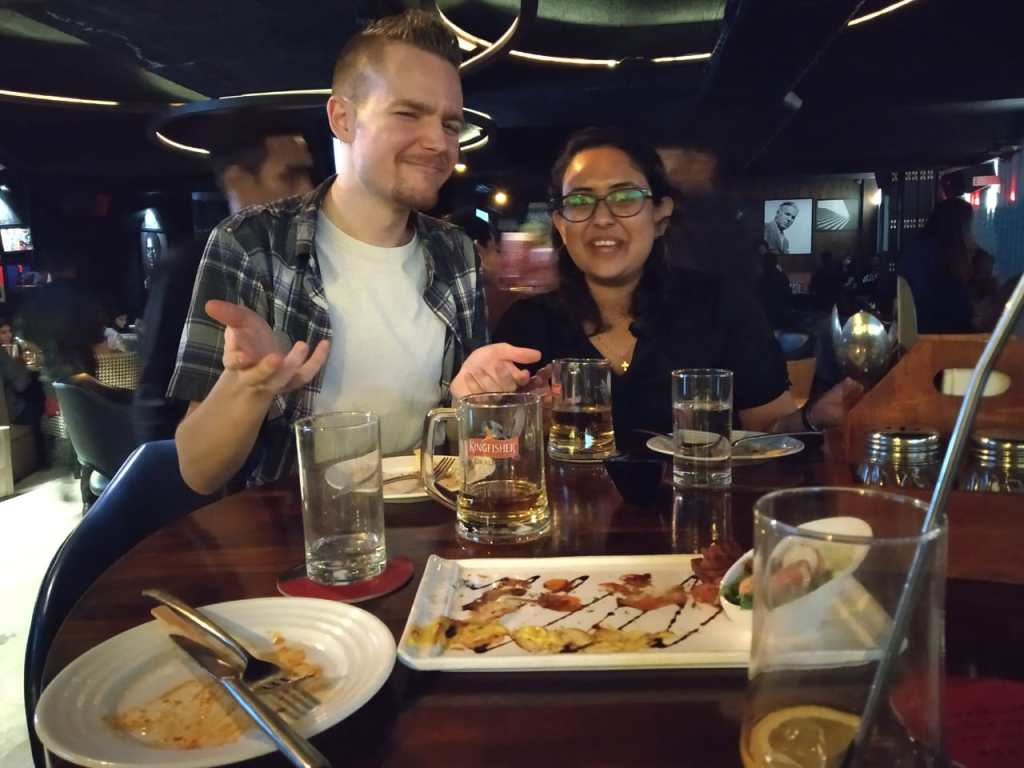
(don’t answer that)
And of course, what else would you expect from a discretion-themed bar than to meet a Tamil film star named Narain?
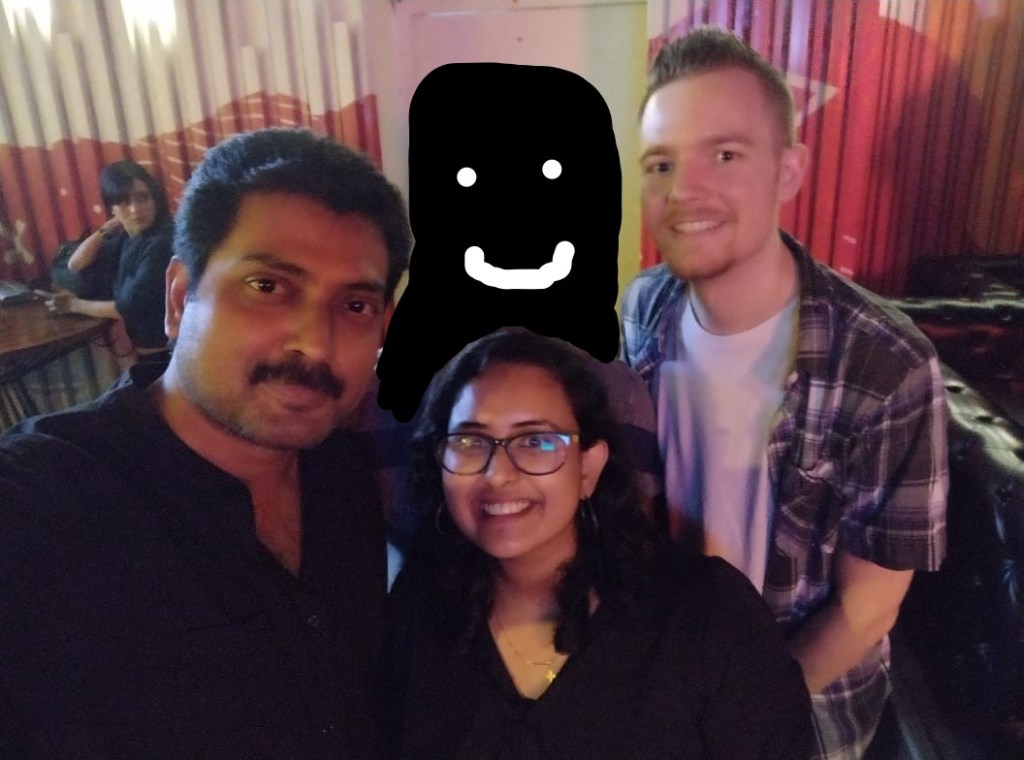
I haven’t gone out a second time with Angela and Mystery Friend, but i have formed a semi-regular board games crew with a current coworker and an ex-HeyMath-employee.
We’ve gotten together nearly every month at The Board Room, a board games café in the Mylapore area east of where i live, to spend the better part of a weekend day playing games, eating food, and generally giving each other good-natured hell.
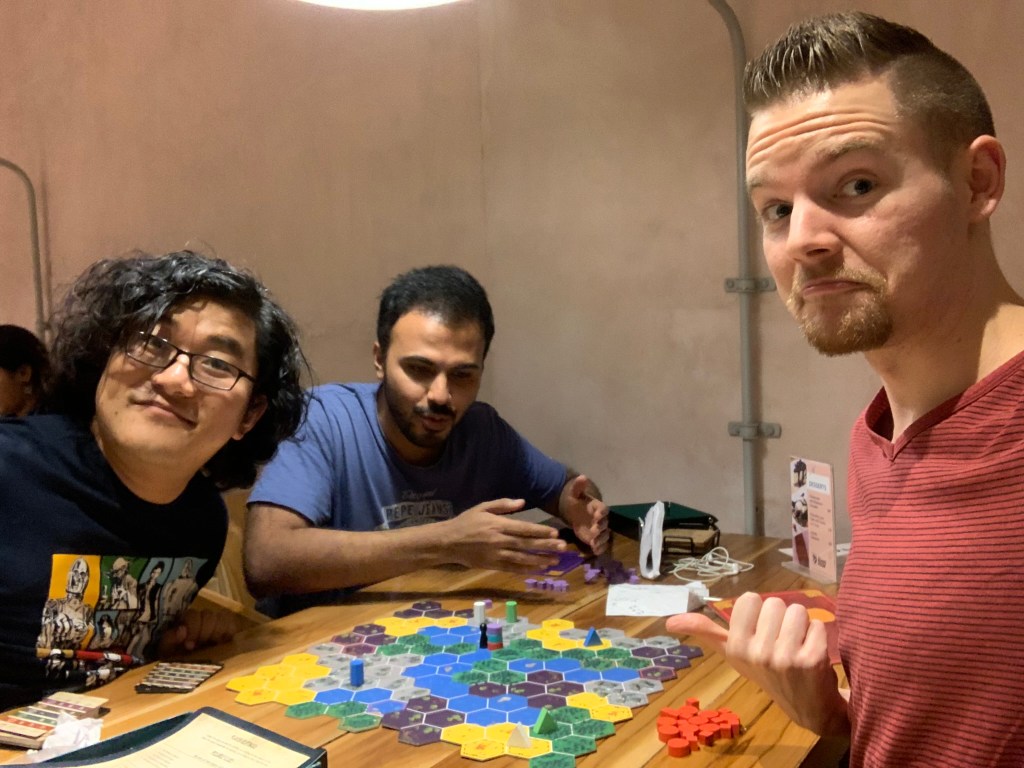
From the games themselves, to meandering conversations with the employees, to the impressively tasty food28, our Board Room days have quickly become a fun monthly tradition and a staple of my Chennai experience.
Conclusion
Needless to say29, meeting and befriending people here has completely changed the character of my experience as a whole, as has studying the local language, learning how to get around, getting accustomed to paying in rupees, and planning the occasional getaway from this year’s ville de l’année.30 I no longer feel like i’m far away from my “real life” on some temporary excursion to a distant country. Instead, i feel like i’m settling in to my new home. And there’s still so, so much this place has left to teach me.31
Until next time ✌🏼💞
Image sources
The Good Place: https://dev.to/catcarbn/pobodys-nerfect-462l/comments
Jaywalkers: https://in.reuters.com/article/idINIndia-30854320071206
Pretentious armchair man: https://www.learning-mind.com/pretentious-people-seem-smarter/
Contemplative white guy: https://www.shutterstock.com/image-photo/pensive-young-man-sitting-on-floor-671471989
Segway: https://www.quora.com/Is-there-any-way-to-make-a-person-riding-a-Segway-not-look-like-a-total-dork
Grease scene: https://www.youtube.com/watch?v=6soXf476aV0
American football tackle: https://www.youtube.com/watch?v=v-1MQ0Cnbhs&t=6s
Grumpy baby: Photo by Ryan Franco on Unsplash
Inbetweeners GIF: https://giphy.com/gifs/thumbs-up-friend-simon-4VdAe6apKga4w
Sausage: Photo by Charles Deluvio on Unsplash
Hilton Q Bar: https://www.zomato.com/chennai/q-bar-hilton-chennai-guindy
Flaming surfer: https://www.mensjournal.com/adventure/7-absurd-stunts-jamie-obrien-ever-pulled-off/
Wacky skeleton: Photo by Bart Heird on Unsplash
 Stranger in a New Land